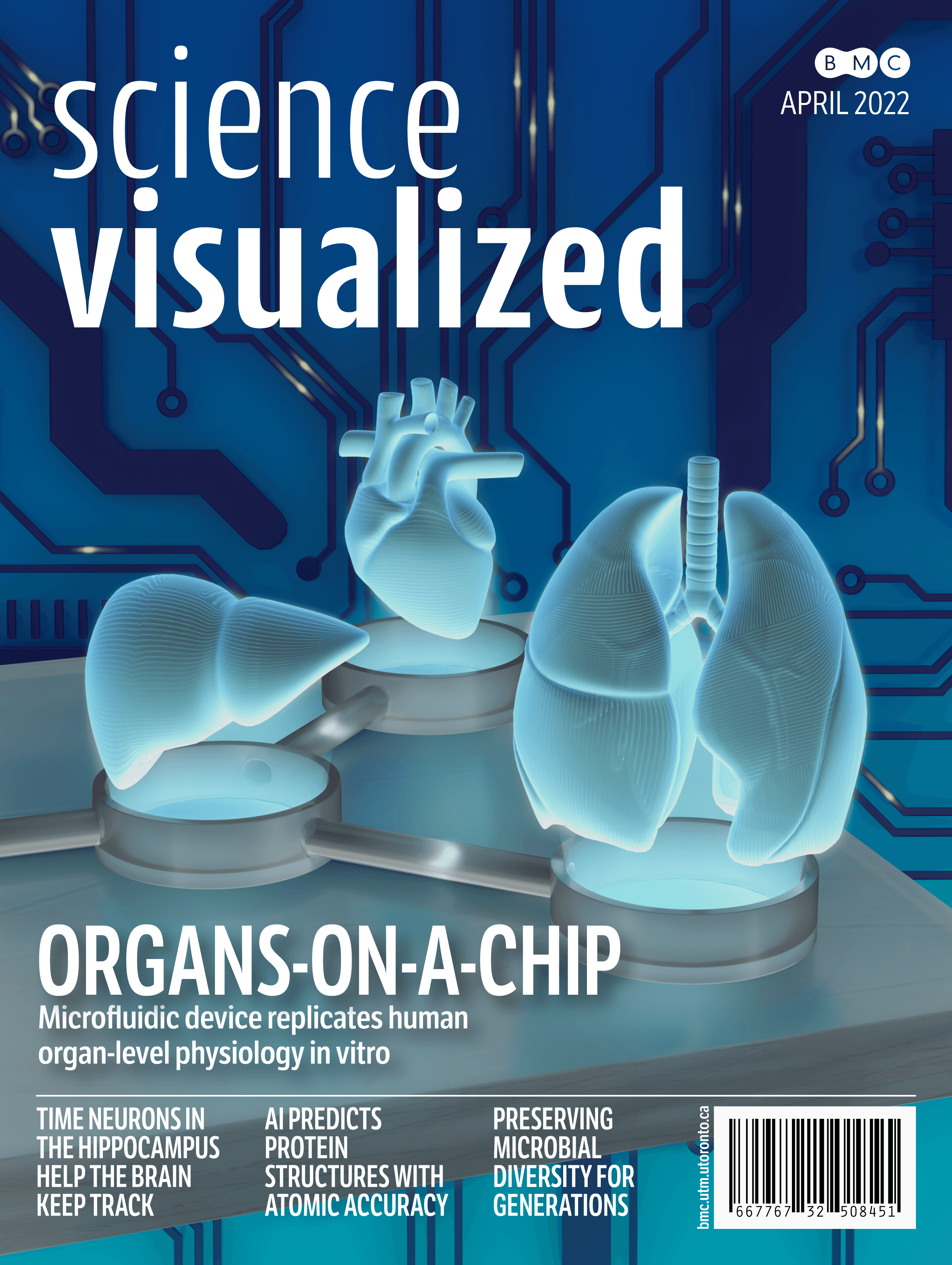
Mock Editorial Cover
A mock editorial cover on the research topic of microfluidic organs-on-a-chip.
3D
Illustration
Visual Design
Project Overview
Client: Stuart Jantzen, University of Toronto
Industry: academia, research
Audience: academic audience
Type: mock editorial cover
Tools: Autodesk Maya, Adobe Photoshop, Adobe Illustrator
Date: April 2022
This is a mock editorial cover for the fictional journal of Science Visualized. Based on a review article by Park, D. et al. discussing the topic of organs-on-a-chip, these small microfluidic devices contain human cells that can mimic organ structures, functions, and reactions to biological conditions.
Using a 3D medium, I chose to represent organs-on-a-chip through a visual metaphor of holographic organs and circuits. The goal of this project was to communicate the complex scientific topic of integrated organs-on-a-chip to an academic audience in a visually interesting manner.
Design Solution
Thumbnails and Comprehensive
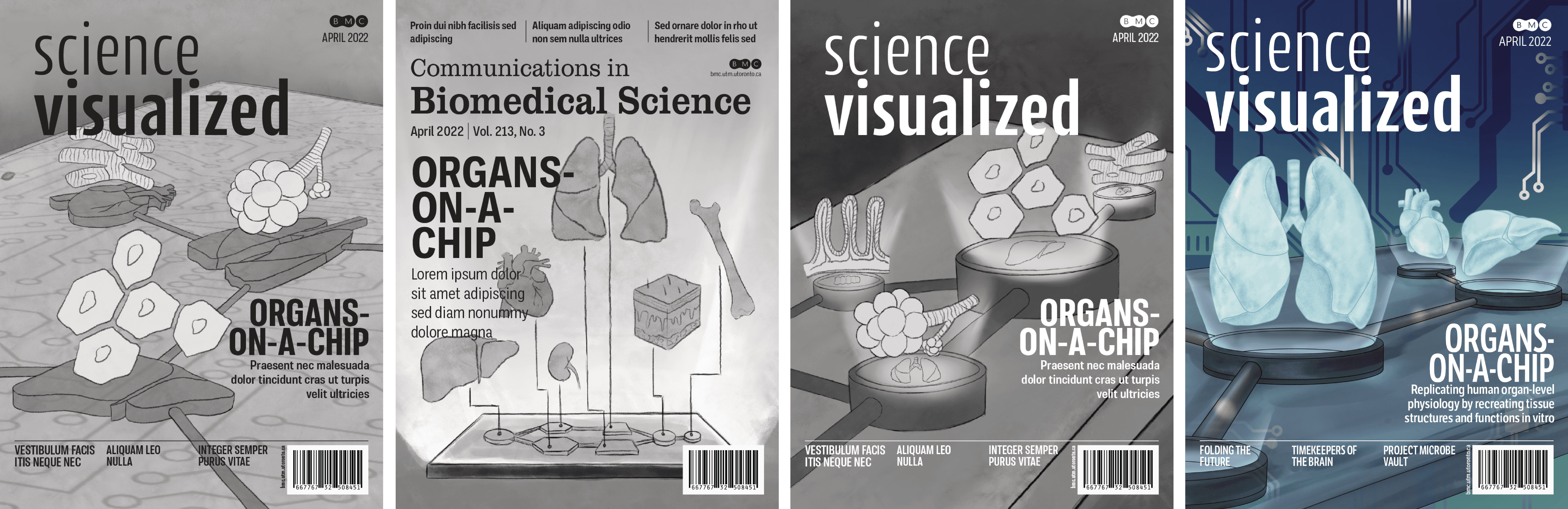
The ideation process started with a series of thumbnail sketches. After feedback from the client and my peers, I drafted a 2D comprehensive of my design. This included some colour palette and text layout compositions. View the ideation process in this progression of thumbnails from left to right!
3D Modelling
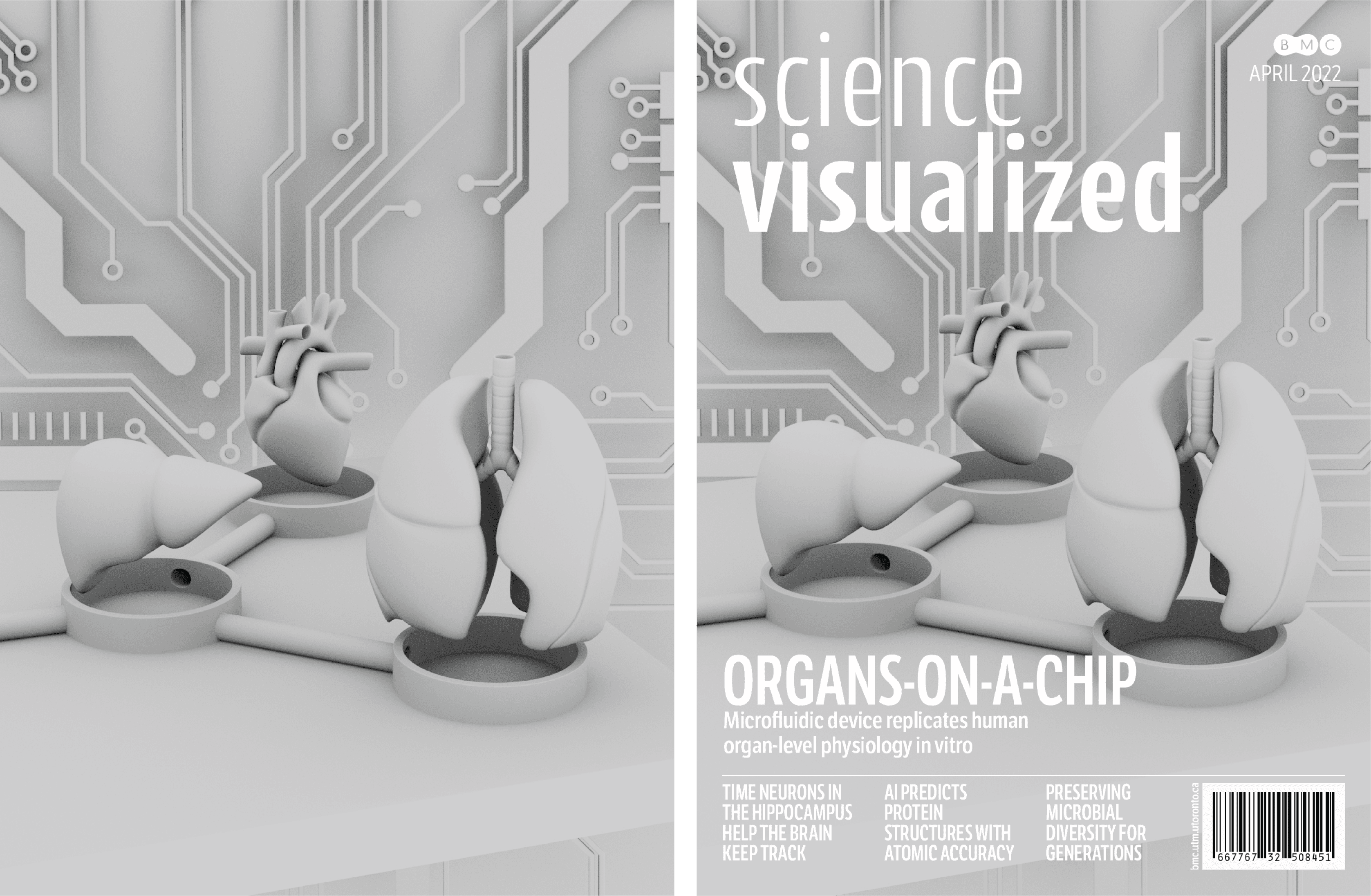
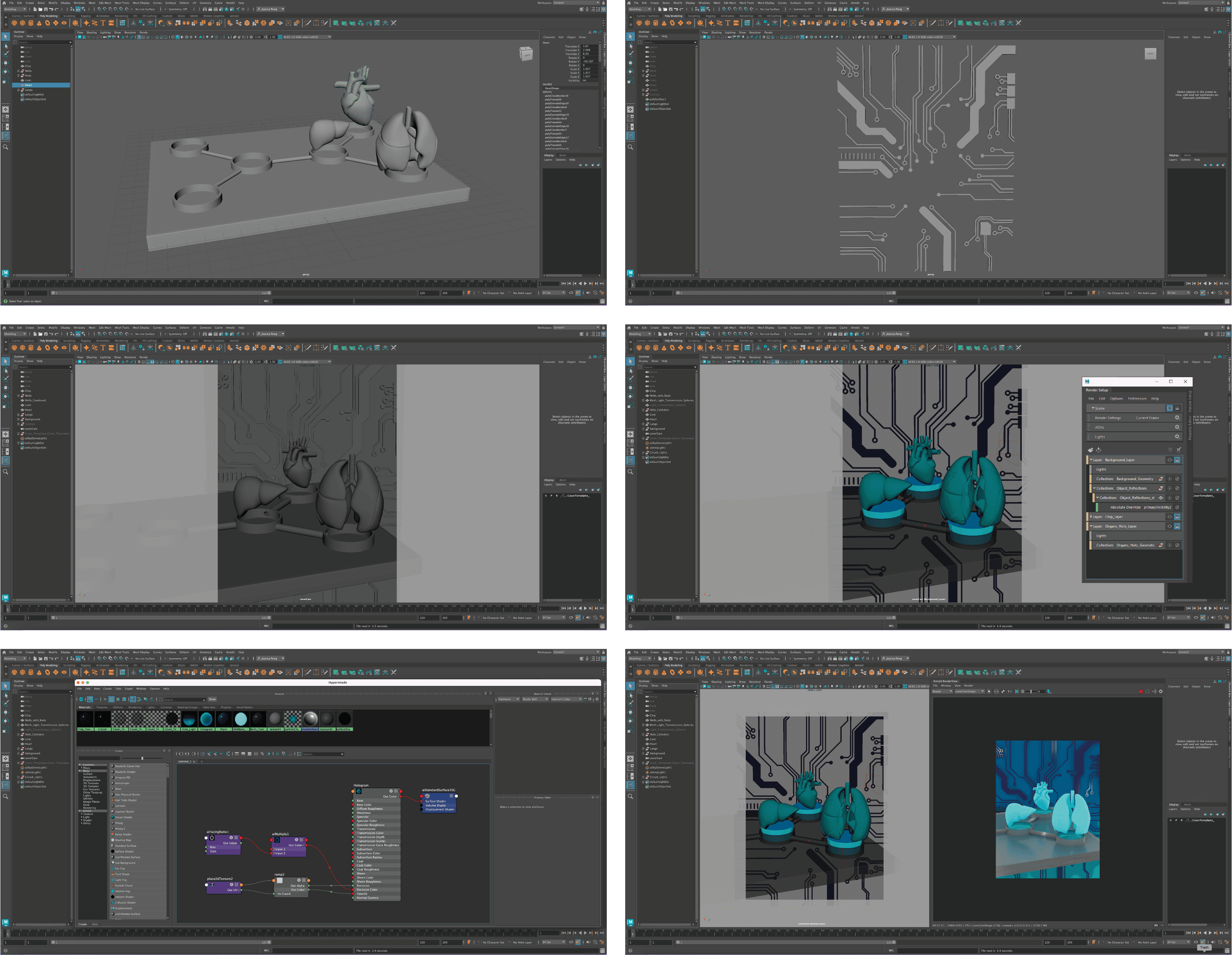
A list of assets for the components of the journal cover was created to track progress and break the project into manageable working files. All assets were modelled in Autodesk Maya and were categorized into three subgroups, 1) the chip, 2) the organs, and 3) the circuit background. The layout of the cover was also reviewed at this stage to ensure the journal text was appropriate and visible in the composition.
Texture and Materials
For the texture and materials of the organ 3D models, I wanted to created a holographic effect to evoke the concept of technological advancements. I achieved this effect through the combination of a ramp and facing ratio node. This allowed for the creation of a lined and coloured emissions effect. The rest of the 3D assets used an aiStandardSurface shader with modifications to transparency and emissions. An additional texture map was used for the material of the chip to provide a rough, plastic-like feel.
Render
For the render, assets were grouped into different layers based on the texture, materials, and composition. Rendering the organs on a separate layer from both the chip and circuit allowed for better control in the interaction of lights and reflective materials for post-production compositing in Adobe Photoshop.
Final Product
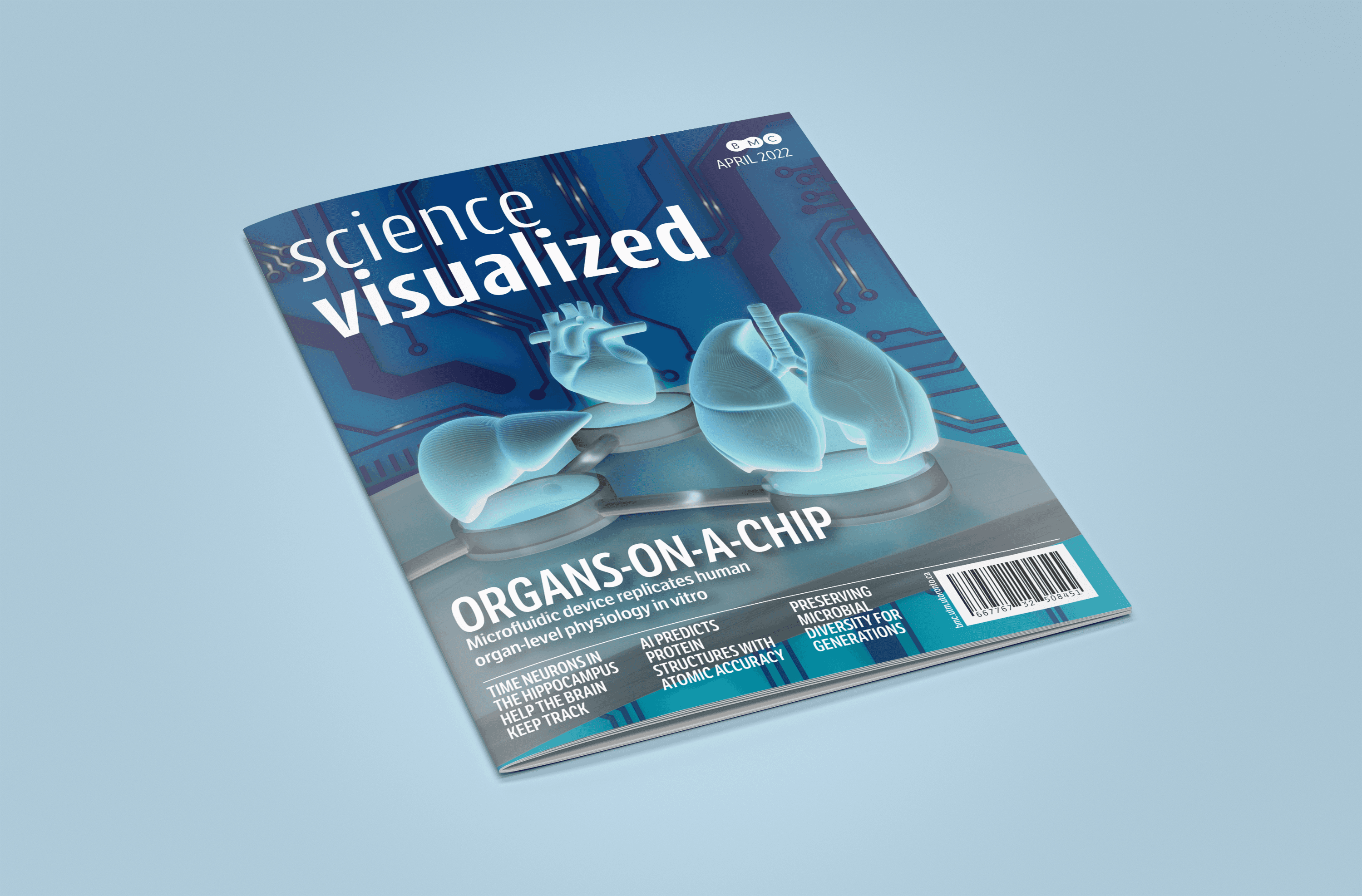
Find the final mock journal cover render below!